

Symptom guide
Sub-Zero making noise in Menlo Park
A built-in that has started buzzing, rattling or knocking is usually telling you exactly which part is tired — if you know how to read the sound. This guide decodes the common Sub-Zero noises, separates the normal ones from the faults, and matters more than ever in the open-plan great rooms where the refrigerator shares the living space.
Quick answer
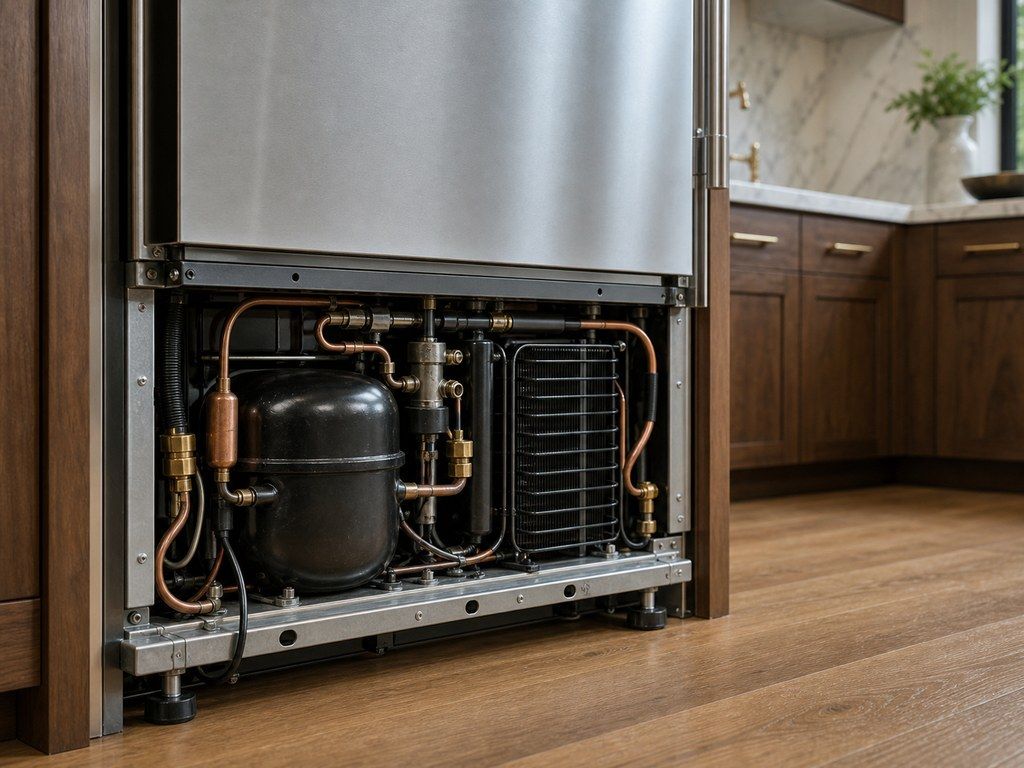
Most Sub-Zero noises decode to a part: a steady hum or buzz is the compressor or condenser fan, a rattle is usually a fan blade or a loose grille, a sharp click is a relay or the defrost timer, a gurgle is normal refrigerant flow, and a deep knock can be compressor mounts. First decide whether the sound is new and constant or occasional and normal. If it is loud, new and steady, note when it happens and book a visit before a tired fan or relay takes more with it.
- $89 service call, waived when you book the repair
- 365-day warranty on all labor
- Genuine OEM Sub-Zero parts
- Panel-ready, cabinet-safe service
Decode the sound to the part
A Sub-Zero is not silent — it hums, ticks and occasionally gurgles as part of normal operation. The skill is telling routine sounds from a developing fault, and the character of the noise is the clue. A new, louder, or constant sound is what warrants a look; a soft sound that has always been there usually has not. Use the decoder below to narrow it down before you call so we can bring the likely part.
| The sound | Most likely source | Normal or fault? |
|---|---|---|
| Steady hum or buzz | Compressor or condenser fan | Normal quietly; a fault if loud or new |
| Rattle or vibration | Fan blade, loose grille or panel | Usually a fault — something is loose |
| Sharp click or tick | Start relay or defrost timer | Occasional is normal; rapid clicking is a fault |
| Gurgle or bubbling | Refrigerant moving through the lines | Normal — no action needed |
| Deep knock or thud | Compressor mounts or hard start | A fault worth diagnosing |
| High whine or squeal | Evaporator or condenser fan motor | A fault — a bearing is wearing |
Two sounds deserve attention quickly. Rapid clicking — a click every few seconds rather than now and then — often means a start relay or compressor that is struggling to start, which can leave the unit warming; that overlaps with the not-cooling diagnosis. A rising whine or squeal is usually a fan-motor bearing on its way out, and replacing the motor before it seizes is far cheaper than the airflow loss that follows.
When the noise is normal — and when it is not
Plenty of Sub-Zero sounds are simply the machine working. A gurgle after the compressor cycles off is refrigerant settling. A faint tick as the defrost cycle starts and ends is the timer doing its job. A low hum during a long run on a hot day is the condenser fan keeping the coil cool. None of these need a service call. What changes the picture is new, loud, or constant — a hum that has become a drone, a rattle that was never there, or clicking that repeats every few seconds.
- Normal: occasional gurgle or bubbling, a soft tick at defrost, a quiet steady hum while running.
- Worth a look: a rattle or buzz that grows, especially when the compressor first starts.
- Book promptly: rapid clicking, a deep knock, or a rising whine — these signal a relay, mounts or a failing fan motor.
- Locate it first: note whether the sound comes from the lower grille (compressor/condenser) or from inside the cabinet (evaporator fan).
A dust-packed condenser is a common, overlooked cause of a noisier, harder-working built-in: starved of airflow, the fan and compressor run longer and louder. We clean and check the condenser as part of the visit, but leave the disassembly to us — the lower grille and fan are easy to damage.
Why noise matters more in an open-plan estate kitchen
The great-room remodels that define so many West Menlo and Allied Arts homes put the kitchen, dining and living areas in one continuous space — and a built-in column that sits in that room has nowhere to hide its noise. A fan rattle that would go unnoticed in a closed galley becomes the background of every evening in an open-concept kitchen. The quiet hillside homes off Sand Hill Road are the same: with little ambient sound, a developing compressor knock or fan whine stands out and is worth resolving early.
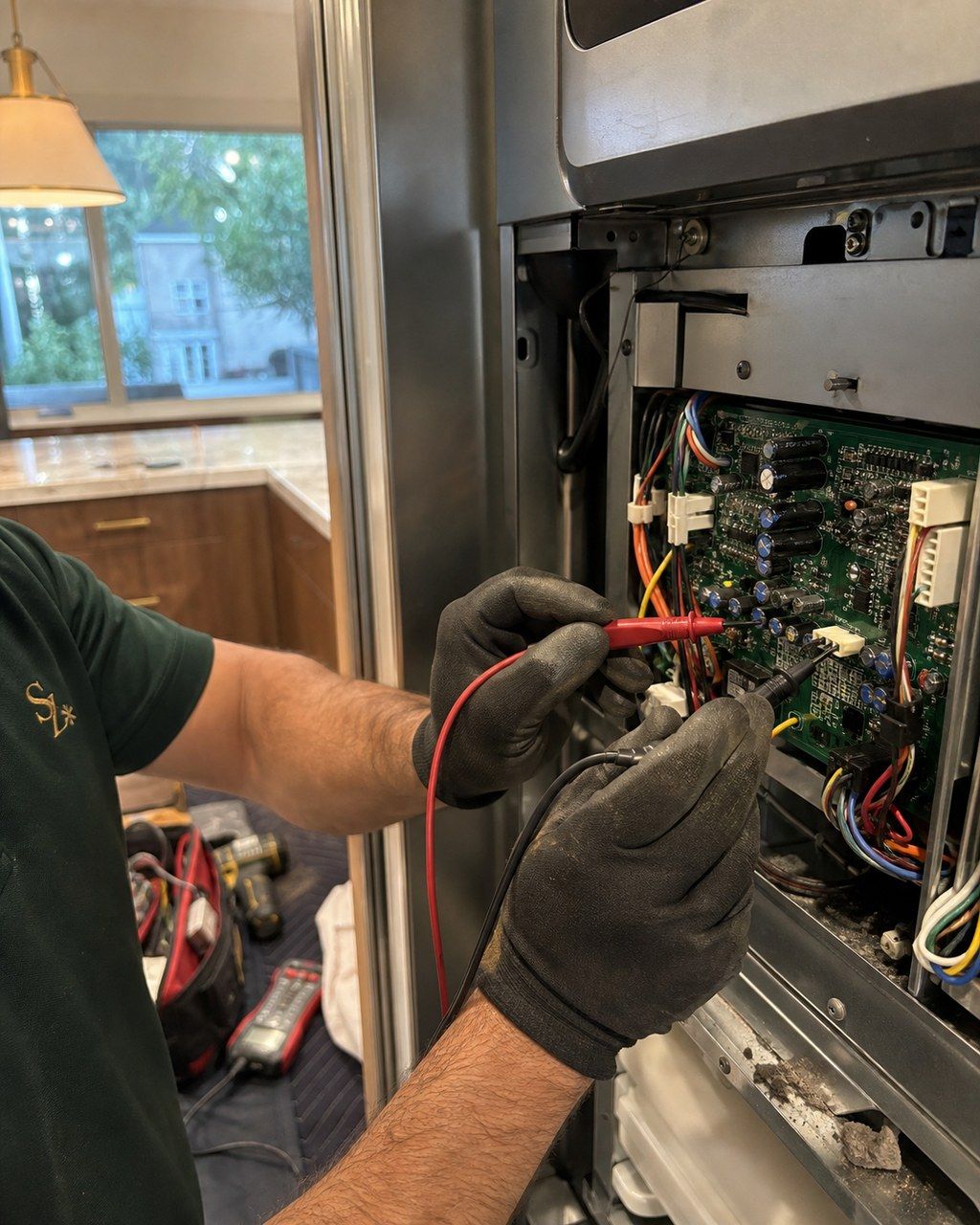
We locate the exact source rather than swapping parts on a hunch — condenser fan, evaporator fan, relay, or compressor mounts each sound subtly different, and each is a different repair. On anything pointing at the sealed system or compressor, we show you the electrical and pressure evidence first; the process is on our sealed-system page.
Honest range: a fan motor or relay repair typically runs $300–$850, while a compressor or mount issue is higher and quoted only after evidence. The $89 service call is waived when you book the repair; the pricing page has the full breakdown.
Before you call
How to identify a Sub-Zero noise before you call
Safe steps that often pin the sound to a part before we arrive.
- 1
Describe the sound
Hum, buzz, rattle, click, gurgle, knock or whine — the character of the noise narrows down the part.
- 2
Note when it happens
At start-up, constantly, only during defrost, or when the door opens — timing separates normal sounds from faults.
- 3
Locate the source
Listen at the lower grille (compressor and condenser fan) versus inside the cabinet (evaporator fan).
- 4
Record a short clip
A 20-second phone recording of the sound, with a note on timing, often identifies the fault before the visit.
- 5
Record and book
Note the model and serial along with the sound and timing, then book the visit so the likely fan or relay part comes with us.
Service area
Sub-Zero repair near you in Menlo Park & the mid-Peninsula
When you search for Sub-Zero repair near me, you want someone who already knows the gated drives, tight built-in cutouts and panel-ready columns of this area. We are based around Menlo Park and cover the estate kitchens of the mid-Peninsula by appointment, often same or next day when the schedule allows.
Menlo Park neighborhoods
- West Menlo
- Allied Arts
- Felton Gables
- Sharon Heights
- Linfield Oaks
Nearby cities we cover
- Atherton
- Palo Alto
- Redwood City
- Woodside
- East Palo Alto
Reviews
Quiet built-ins again across Menlo Park
Rated 4.9/5 across 738 verified repairs
- GE Monogram
GE Monogram built-in had a noisy fan and weak cooling. They replaced the evaporator fan motor with a genuine part and cleared a blocked drain line. Quiet and cold again. The $89 diagnostic was waived with the repair and they cleaned up completely. Recommend without hesitation.
- Sub-Zero
The built-in sits in our open great room, so a new rattle was impossible to ignore in the evenings. They tracked it to a worn condenser fan motor, replaced it with a genuine part, and cleaned the coil while they were in there. The kitchen is quiet again — they pinpointed the source instead of guessing at parts.
- Sub-Zero
Our 48-inch Sub-Zero built-in went warm on the fridge side while the freezer stayed fine. They diagnosed a failing evaporator fan the same visit, had the genuine part on the truck, and the $89 service call was waived once we approved the repair. Careful, tidy, and clearly know these built-ins.
Answers
Frequently asked questions
What do the different Sub-Zero noises mean?
A steady hum or buzz is usually the compressor or condenser fan; a rattle is typically a loose fan blade, grille or panel; a sharp click is a relay or the defrost timer; a gurgle is normal refrigerant flow; and a deep knock can be the compressor mounts. A rising whine usually means a fan-motor bearing is wearing. The character of the sound points us to the part.
Which Sub-Zero sounds are normal?
An occasional gurgle or bubbling as refrigerant settles, a faint tick when the defrost cycle starts and ends, and a quiet steady hum while the unit runs are all normal. What warrants a look is a sound that is new, loud, or constant — a hum that has become a drone, a rattle that was not there before, or clicking that repeats every few seconds.
My Sub-Zero is clicking repeatedly — is that serious?
Rapid clicking — a click every few seconds rather than now and then — often means a start relay or a compressor struggling to start, and it can leave the unit warming up. It is worth diagnosing promptly, because catching a failing relay early is far cheaper than the consequences of a compressor that cannot start.
Why is my built-in suddenly so much louder?
A common, overlooked cause is a dust-packed condenser: starved of airflow, the fan and compressor run longer and louder. A worn fan-motor bearing also raises the volume with a whine or squeal. We clean and check the condenser and locate the exact source on the visit rather than guessing at parts.
How much does it cost to fix a noisy Sub-Zero in Menlo Park?
A fan motor or relay repair typically runs $300–$850 depending on the part and access. A compressor or mount issue is higher and is only quoted after we show you electrical and pressure evidence. The $89 service call is waived when you book the repair, and you approve a written quote before any work.
A fan rattle is annoying in my open-plan kitchen — can you quiet it?
Yes. In the open-concept great rooms common around West Menlo and Allied Arts a built-in’s noise carries through the whole living space. We locate the source — condenser fan, evaporator fan, relay or compressor mounts each sound different — and repair the specific part so the kitchen is quiet again.
Menlo Park Built-In Refrigeration Specialists
Quiet your Sub-Zero built-in
Call now or book online. We decode the sound, locate the source, and quote before any repair.
$89 service call, waived when you book the repair. 365-day warranty on all labor.